Allen Saxon
In the 1960’s graffiti reading “Clapton Is God” appeared on walls in London. Rock musicians weren’t really deities ( Well, maybe the Beatles were an exception). Even so, the rise of electric guitar-fueled rock and roll music was a revolution in popular culture.
Suddenly bands were everywhere. Every high school had one or two, even if sometimes the musicianship was severely lacking. Record companies, hoping to duplicate the success of the British Invasion bands, were continually on the lookout for “the next big thing.”
This provided creative opportunities for the musicians themselves. Just as Paul McCartney owed a debt to the old British music halls, American musicians hungered to explore our country’s musical landscape.
In 1969 my college roommate returned from the Atlanta Pop Festival extolling the virtues of an electric band that played country music. He had heard them sandwiched in between the sets of The Chambers Brothers and Jimi Hendrix.
Back then there was sort of a cultural divide in American music, not strictly a Blue and Red divide like today’s politics, but maybe a Blue, Red, and Brown divide. Mainstream radio brought the sounds coming out of Detroit to white suburban teen-agers, while British bands like the Rolling Stones were quick to recognize their debt to Blues artists.
Country music was the poor cousin in the back seat. Failing to recognize the beauty in their lyrics and the instrumental virtuosity of the players, country music was looked down upon as representative of an unsophisticated, uneducated lower socioeconomic class.
Later, when I first heard the band my friend heard in Atlanta, Poco, I was hooked. Right after I first saw them, I went out and bought a Bill Monroe album ( Well, bluegrass is a genre of country music).
Over the years their music has been a continued source of joy, and I was thrilled when I eventually met and became good friends with several of their members. Some of the original lineup went on to other project. Richie Furay joined a super group before his solo career, and Jimmy Messina became a staple sound on radio when he teamed up with Kenny Loggins. The Eagles not only copied their sound, but recruited two of their bass players. Through other iterations the band maintained a loyal following and superb level of musicianship.
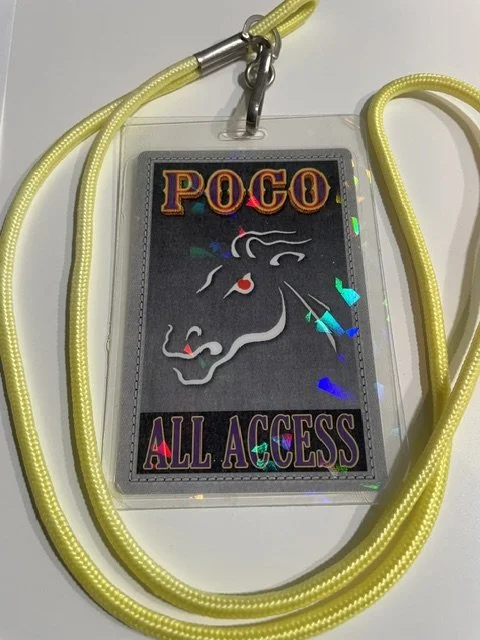
I was fortunate to not only be on their guest list at live performances but to have been gifted a permanent backstage pass. Although the band hasn’t continued since the deaths of Rusty Young and Paul Cotton, this pass remains a treasured reminder of many happy times and the body of work they left behind.