We live half the year in Maine on the Damariscotta River, a tidal estuary with 10 ft tides that is home to lobsters, alewives, stripers, osprey, herons and eagles and the best oysters in the world.
It is no surprise that humans have inhabited these shores since the great Laurentide ice sheet began melting over 14,000 years ago. Those first arrivals adapted well to the climate with fresh water streams and abundant fish and game. When winter’s darkness descended, they migrated inland to thick forests for shelter from storms and when spring dawned, they returned to the coast to enjoy the fruits of the sea. Like summer folks now.
In my late 70’s, I am reminded often of my age and mortality and have time to consider life’s beauty and its brevity. Time seems like an accordion that expands, then contracts. Events long ago suddenly reappear in memory, as if dusted off.
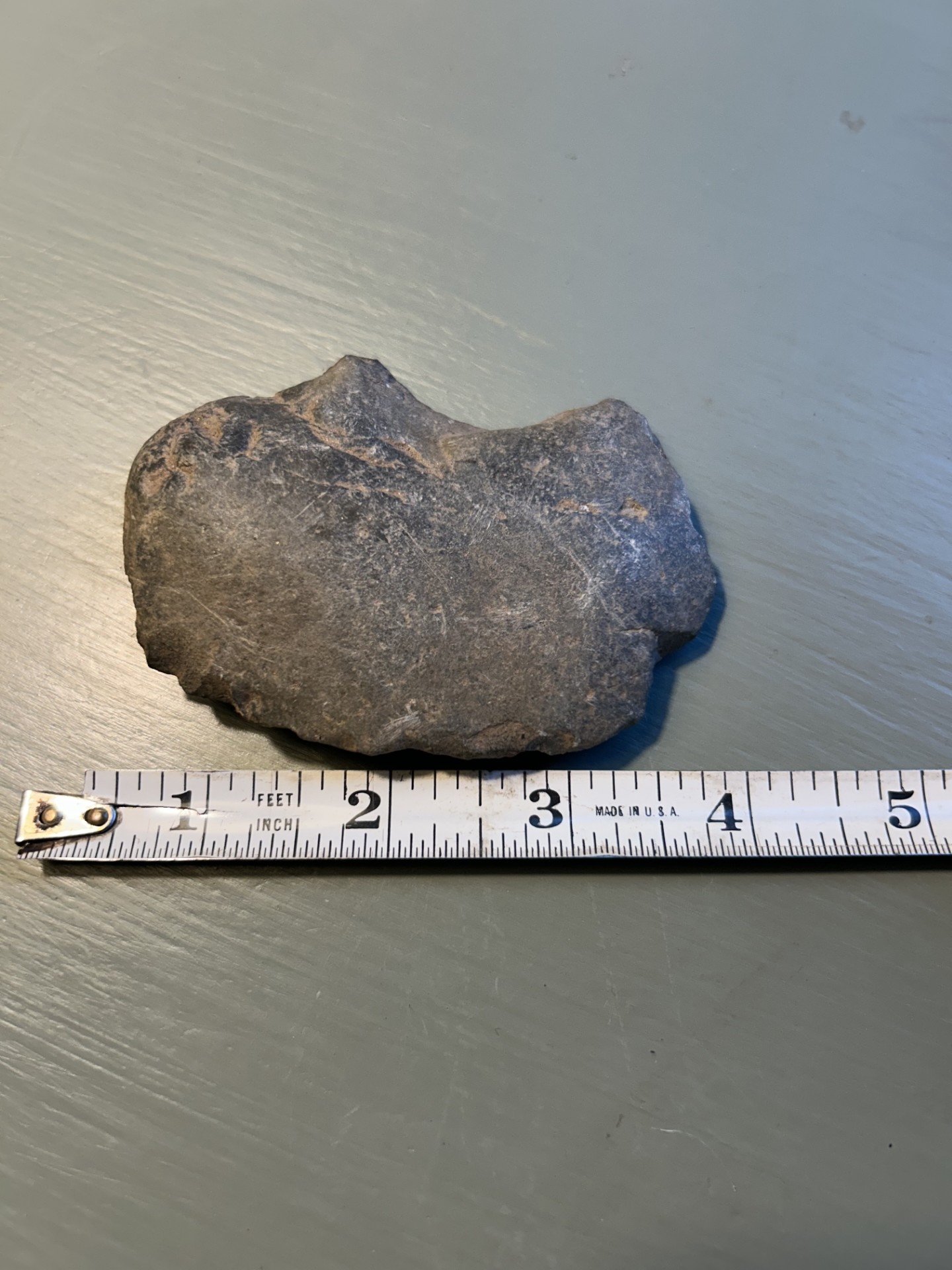
So it was, one morning last summer, when I started down an old path next to our cottage that leads to the river bank and noticed a smooth stone I hadn’t seen before. Maybe the last rains had washed off the dust. As soon as I grasped it, I knew this dark rock had once been a tool. A scraping tool, the way it fit my hand. Its chipped edge was no accident.
The day after my discovery, I sent photos of the stone and its location to a college professor with the Maine Archeological Society. He replied: “My hunch is that it is Archaic in age, something like 3,000-9,000 years old. Paleoindian folks focused on super high quality, glassy lithic materials that they sourced while traveling long distances following caribou herds, while this type of more of opportunistic sourcing of somewhat rougher, volcanic lithic materials from river cobble sources is more characteristic of that Archaic period where people were settling down a bit with the emergence of the Holocene landscapes we see today...”
When I handed the stone to a guest recently, the man, an artist given to reflection, mused a moment, then observed that the person who made the tool must have been right-handed, because he, being left-handed, could not properly grasp it. Some stones tell stories.
I am likely the first person to have had this stone in hand since it was shaped for practical purpose some millennia ago, then lost in time. What will they find of us, I wonder, long after this era passes?