Adair Heitmann
The smell of salty soy sauce calms me as I gaze out Baye and Ruth’s large dining room windows overlooking the water on the coast of Connecticut. Our homemade dinner consists of Japanese miso soup, hand-rolled sushi, and delicately deep-fried shrimp tempura. Each dish skillfully prepared by my godmother-chosen-by-love, Kazue Mizumura, affectionately called “Baye.”
Baye and I met when I was fresh out of art college, making my way in the world as a single woman and professional artist. She was Japanese, I was American, she was 50, I was 25, she was Shinto, I was Presbyterian, yet it was as if we were cut from the same cloth. We shared creative spirits, independence, feminism, and she fondly called me, in her heavily accented English,“daughter.”
During our decades-long close friendship, I spent many dinners at her house discussing current events, art and culture, and our professional projects. Each meal was accompanied by raucous laughter, in her and Ruth’s tiny secluded pink house. After each meal we enjoyed a cup of hot Japanese barley tea, savoring its toasty, nutty flavor. The tea was our dessert.
Baye was an author, illustrator, poet, and jewelry maker. I aspired to be an artist, author, and designer. I had no living role models for this, all the famous women artists I knew of, were dead. Baye was flesh and blood, the real deal. Even more than that, when I was with her, I felt loved.
After Baye passed away, her life partner, Ruth, waited 10 years before Ruth asked me to help clean out Baye’s studio and closet. Ruth hadn’t set foot in either since Baye died. During the long arduous process Ruth kept asking me to take something to remember Baye by. I was there to help loved ones, not to take anything.
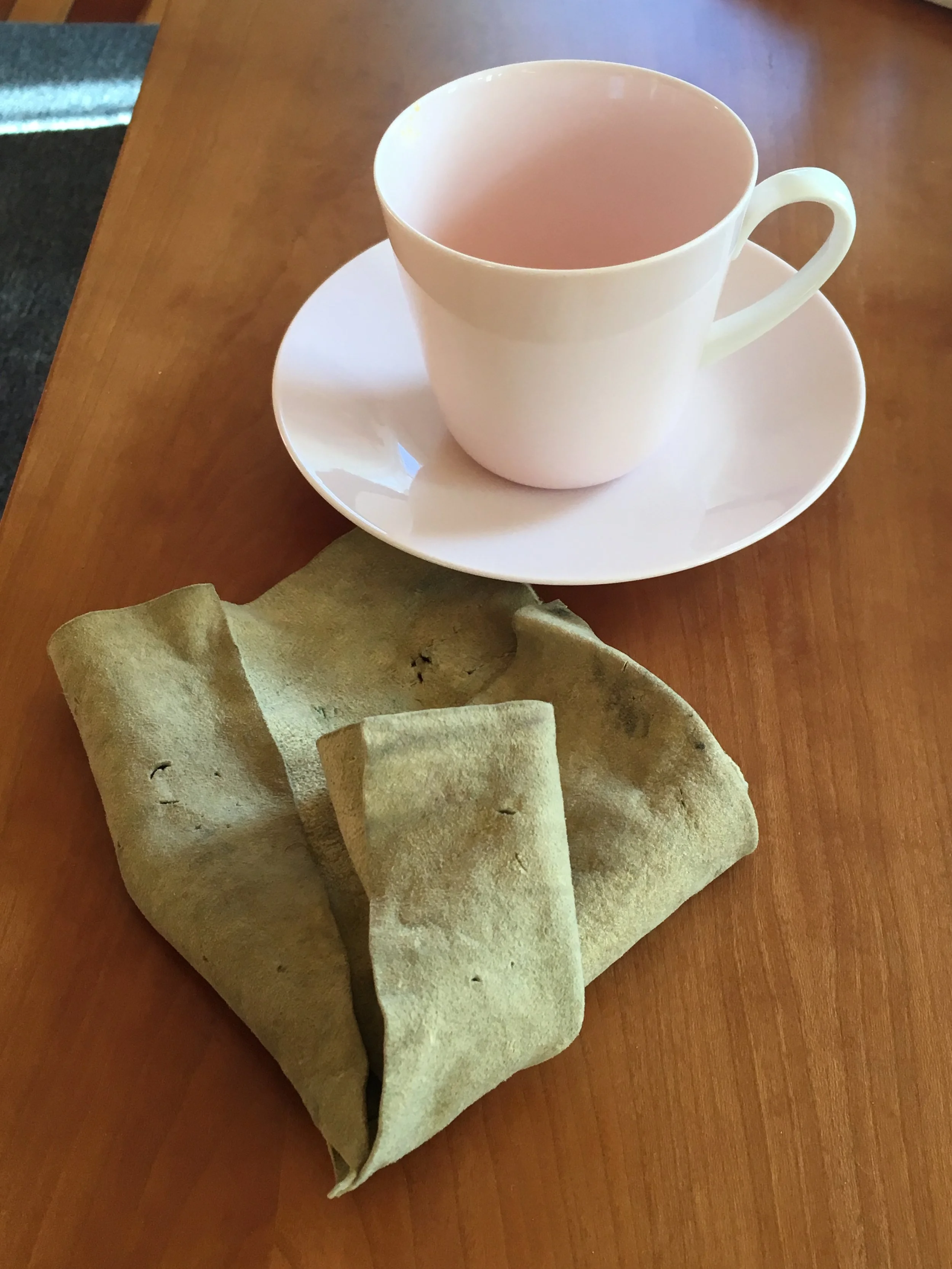
Finally, after weeks of sorting, sifting, packing, and giving away Baye’s tools of her trade and clothing, I decided to take something. Treasuring my time with Baye and Ruth around their dining table, relishing in each other’s intelligent witty conversations, while devouring delicious Japanese meals, I decided to take Baye’s set of pink porcelain tea cups and saucers. They matched the color of their house.
Then, on the last day of the massive clean-out, I found something deeply buried in the back of a drawer in Baye’s studio. It was an old, heavily-used chamois cleaning cloth. Baye used it to polish jewelry she made. I reached in, retrieving it. I felt the old, soft, supple, natural leather sheepskin. There were holes in it from Baye’s decades of use, grime marks too.
But, Baye’s hands, my Japanese godmother-chosen-by-love had used it, in her hands, as she worked for years. To me, the chamois was a cherished object of great value. I keep it now in my jewelry drawer in my home. Each time I use the cloth to polish my own earrings, my love for her and her love for me are close at hand.